How to design a structured interview process
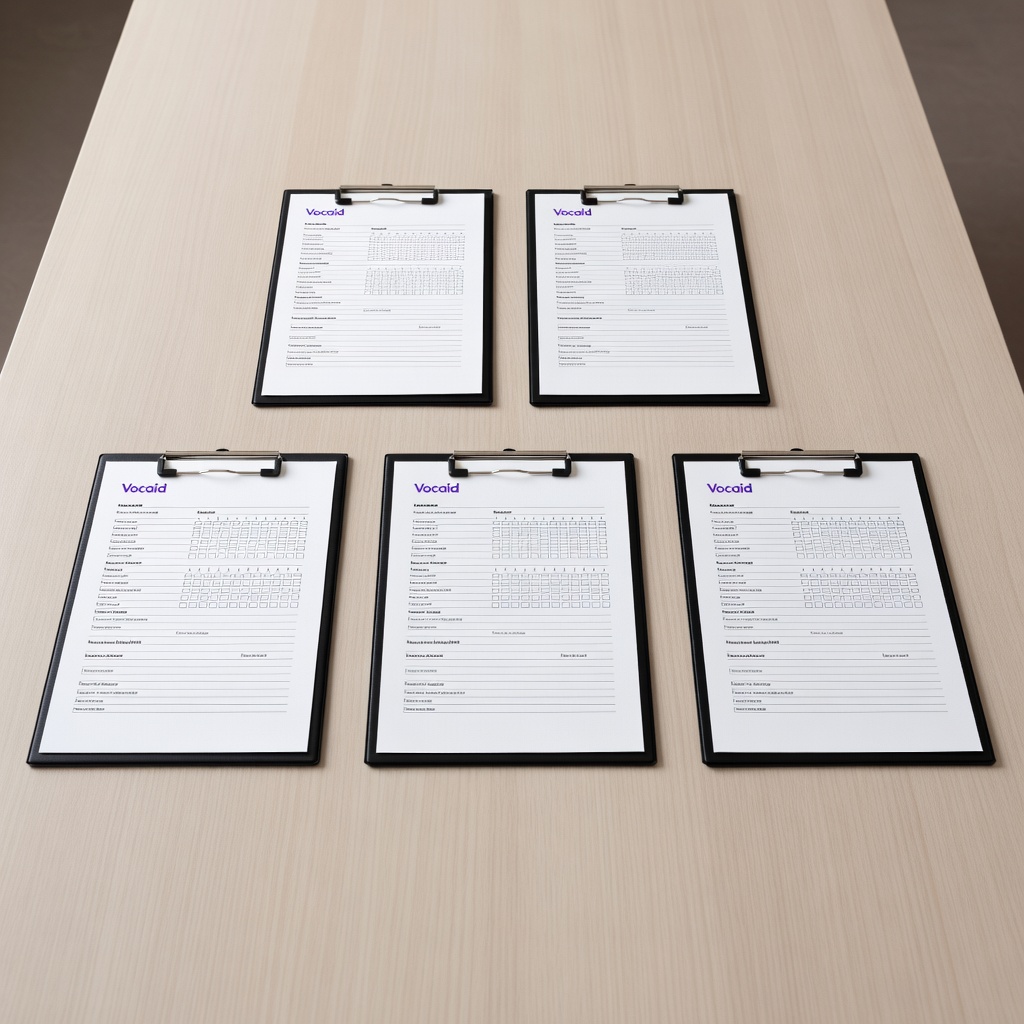
A structured interview process uses predetermined, standardized questions and evaluation criteria for all candidates applying to the same role. It ensures fair, consistent assessment by defining core competencies upfront, scoring responses against clear rubrics, and training interviewers to minimize bias—resulting in faster, more defensible hiring decisions that predict job performance better than unstructured approaches.
I've watched talented hiring managers struggle with this: they interview five candidates, each conversation drifts in a different direction, and when it's time to compare notes, they're evaluating five completely different datasets. One candidate got asked about leadership philosophy, another about project management tools, a third about their biggest career mistake. There's no common ground for comparison. The team defaults to "gut feel," which usually means whoever had the warmest rapport or most confident handshake wins.
That's not hiring for excellence. That's hiring by chance.
The hiring managers I've worked with at high-growth companies learned this the hard way: without a structured interview process, you're not just risking bad hires—you're systematically screening out great candidates who don't perform well in ambiguous, conversational settings but would absolutely crush the actual job.
What Actually Defines a Structured Interview Process
Let's clear up what we mean by "structured." This isn't bureaucracy for its own sake. A truly structured interview process has three non-negotiable elements:
Standardized questions that every candidate for the same role encounters. Not identical word-for-word scripts necessarily, but the same core competencies explored through the same question framework.
Pre-defined evaluation criteria that your interviewers agree on before meeting candidates. You decide what "good" looks like for each competency, then measure candidates against that standard—not against each other.
Consistent scoring methods applied uniformly. Whether you use a 1-5 scale, a yes/no/strong-yes framework, or detailed rubrics, everyone on your interview panel uses the same system the same way.
Most companies think they're doing structured interviews because they have a standard set of questions in a Google Doc somewhere. But if your interviewers aren't scoring candidates the same way, if they're adding follow-ups based on personal curiosity rather than competency gaps, if they're weighing different factors in their final assessment—you don't have structure. You have theater.
The Business Case: Why Structure Wins
The evidence on this is clear. Structured interviews consistently outperform unstructured approaches on every metric that matters to talent leaders and hiring managers.
Predictive validity is the headline benefit. When you standardize questions and scoring, you're comparing candidates on the same dimensions using the same ruler. That consistency produces better signal about who will actually succeed in the role.
Bias reduction follows naturally. When every interviewer asks the same questions and scores against the same rubric, there's less room for similarity bias, halo effect, and recency bias to creep in. You can identify and address how to reduce interview bias systematically rather than hoping individual interviewers self-correct.
Legal defensibility matters more than most teams realize. Structured processes create audit trails that demonstrate job-relatedness and fair treatment. When every candidate answers the same questions and is scored against the same criteria, you can defend your decisions.
Time-to-hire improvements surprise people. Teams assume structure slows things down. The opposite is true. When you're comparing apples to apples, you make confident decisions faster. No endless debrief debates about whether Candidate A's project management experience is comparable to Candidate B's leadership philosophy.
I've built hiring processes at three companies, and the pattern is consistent: teams that resist structure early always come around once they see the quality difference. At my last company, we cut time-to-fill by 18 days while simultaneously improving our first-year retention rate. That wasn't magic. That was structure.
Step 1: Define the Competencies That Actually Matter
Start by identifying 4-6 core competencies that genuinely predict success in this specific role. Not the generic buzzwords that could apply to any job ("teamwork," "communication"), but the specific capabilities this role requires.
For a senior product manager role, that might look like:
- Strategic product thinking (balancing user needs, business goals, technical constraints)
- Cross-functional influence without authority
- Data-informed decision-making under uncertainty
- Stakeholder communication across technical and non-technical audiences
For an account executive:
- Consultative discovery and needs analysis
- Handling objections and maintaining deal momentum
- Multi-stakeholder navigation in complex sales cycles
- Pipeline management and forecast accuracy
Work backward from your top performers. What actually separates your best people from average ones? Those patterns become your competencies. Avoid the trap of listing every possible skill—focus ruthlessly on what differentiates success from adequacy.
If you're unsure where to start, reviewing competency-based interview questions can help you see how other organizations translate role requirements into assessable capabilities.
Step 2: Build Your Question Bank Around Competencies
Once you know what you're assessing, design questions that surface evidence of each competency. The most effective approach combines behavioral interview questions with situational scenarios.
Behavioral questions ask candidates to describe specific past experiences: "Tell me about a time when..." These are grounded in the principle that past behavior predicts future performance. They work because candidates can't theorize or guess—they have to recall actual situations.
Situational questions present hypothetical scenarios relevant to your role: "If you were three weeks from launch and engineering discovered a critical bug that would delay by two weeks, how would you handle it?" These test judgment and problem-solving approach.
For each competency, prepare:
- One primary behavioral question
- 2-3 follow-up probes to dig deeper ("What was your specific role?" "What alternatives did you consider?" "What would you do differently?")
- One situational question as a backup or supplement
The questions themselves don't need to be brilliant. They need to be job-related and asked consistently. I've seen hiring teams waste weeks wordsmithing the perfect questions when what actually matters is asking the same questions and scoring responses against clear criteria.
The follow-up probes are where you get real depth. A candidate might give you a polished opening answer. The probes force them to move past rehearsed narratives into actual detail about their thinking, decision-making, and impact.
Step 3: Create Interview Scoring Rubrics That Work
This is where most structured processes fall apart. Teams define good questions but then leave evaluation to individual judgment. That's not structure—that's just question consistency.
An interview scoring rubric defines what a strong, adequate, or weak answer looks like for each competency. Here's a simplified example for "strategic product thinking":
Strong (4-5): Candidate describes balancing competing priorities with clear trade-off analysis. Shows evidence of using data to validate assumptions. Explains how they aligned stakeholders around difficult decisions. Demonstrates systems thinking.
Adequate (3): Candidate shows awareness of trade-offs but lacks depth in analysis. Some evidence of data usage. Basic stakeholder management. Generally sound judgment.
Weak (1-2): Candidate focuses on execution without strategic context. No clear framework for prioritization. Limited evidence of stakeholder alignment or data-driven thinking.
Your interviewers should be able to read a rubric, hear a candidate's answer, and land on similar scores independently. If two interviewers consistently score the same responses differently, your rubric isn't clear enough.
Test your rubrics with past interview responses. Score a few strong and weak candidates using your draft rubric. If the scores don't align with who you actually hired (and who succeeded), refine your criteria.
The key is behavioral indicators—specific things you hear in an answer that signal competency level. Avoid vague descriptors like "good communication" or "strong leadership." What does good communication sound like in this context? "Candidate explained technical trade-offs in business terms that non-technical stakeholders could act on." That's a behavioral indicator.
Step 4: Train Your Interviewers on Consistency
Even with perfect questions and rubrics, untrained interviewers will introduce inconsistency. The most common mistakes I see:
Confirmation bias: Forming an opinion in the first five minutes and spending the rest of the interview looking for evidence that supports it.
The charisma trap: Conflating "pleasant to talk with" with "capable of doing the job."
Drifting off-script: Adding questions based on personal interest rather than competency assessment.
Scoring on potential rather than evidence: Giving credit for what a candidate "could probably do" instead of what they demonstrated.
Your interviewer training should include:
- Practice sessions scoring sample responses together
- Calibration discussions where the team aligns on what "good" looks like
- Explicit guidance on recognizing and correcting bias
- Clear protocols for when and how to deviate from the script (spoiler: almost never)
I run calibration sessions quarterly with every interview panel. We review recorded practice interviews (with permission), score independently, then discuss discrepancies. This keeps standards aligned even as teams grow.
When interviewers understand why structure matters—not just what the process is—they become advocates rather than reluctant participants. Share the business case. Show them data on how structured interviews improve outcomes. Make them part of the solution.
Want your candidates to show up prepared for this rigor? Point them toward interview preparation tips so they understand what structured interviews require.
Step 5: Structure the Interview Flow Itself
You've defined competencies, built questions, created rubrics, and trained interviewers. Now design the actual interview experience:
Panel Composition
Who assesses which competencies? Avoid having every interviewer ask about every competency—it's exhausting for candidates and creates redundant data. Assign 1-2 competencies per interviewer based on their expertise.
A product leader should assess product thinking. An engineering manager should assess technical collaboration. A cross-functional peer should assess stakeholder management. Match assessors to competencies where they have credibility and pattern recognition.
Interview Sequence
Order matters. I typically structure it as:
- Recruiter screen (logistics, salary expectations, basic fit)
- Hiring manager interview (role overview, core competencies, sell the opportunity)
- Panel interviews (2-3 focused competency deep-dives)
- Final interview (leadership conversation, culture assessment, final questions)
This flow builds momentum and creates natural checkpoints. You're not investing four hours of panel time in candidates who aren't aligned on salary or don't clear the core competency bar with the hiring manager.
Time Allocation
45-60 minutes per interview is the sweet spot. Shorter and you don't get depth; longer and you get diminishing returns plus candidate fatigue.
Budget your time within each interview: 5 minutes for rapport and context-setting, 35-40 minutes for competency questions and probes, 10-15 minutes for candidate questions and close. Stick to it. When interviews run long because "the conversation was so good," that's usually code for "we drifted off-script."
Debrief Protocol
How do you synthesize individual assessments into a hiring decision? I prefer structured debriefs where each interviewer shares scores and evidence before any discussion. This prevents anchoring bias where the first person to speak shapes everyone else's opinion.
Go around the table. Each interviewer states their scores and the specific evidence behind them. Only after everyone has shared do you open the floor for discussion. If there are major score discrepancies, dig into what different interviewers heard or interpreted differently. Sometimes it reveals rubric gaps; sometimes it surfaces real candidate inconsistencies worth exploring.
Common Pitfalls When Implementing Structure
I've watched dozens of teams try to implement structured interviews, and the failure patterns are predictable:
Over-engineering the process: You don't need 47 questions and a 12-page rubric. Start simple. Four competencies, one question each, basic scoring. Refine from there.
Skipping the "why": If your interview team sees this as compliance theater rather than a competitive advantage, they'll cut corners. Make the case with data from your own hiring outcomes.
Inconsistent enforcement: Structure only works if everyone follows it. One senior leader who insists on "just having a conversation" undermines the entire system. This requires top-down commitment. When executives skip the process, it signals to everyone else that it's optional.
Forgetting the candidate experience: Structure doesn't mean robotic. You can have warm rapport, answer questions thoughtfully, and sell your company—all while sticking to your competency framework. Candidates actually appreciate clarity about what you're assessing.
Ignoring the feedback loop: Your first version won't be perfect. Build in mechanisms to collect interviewer feedback, track where candidates struggle, and refine questions and rubrics quarterly.
Check out common pitfalls in our overview of common interview mistakes to see how structure helps you avoid the typical failure modes.
Measuring Whether Your Structure Is Working
You've implemented a structured interview process. How do you know it's actually improving outcomes? Track these metrics:
Interview-to-offer conversion rate: Are you making offers to a higher percentage of candidates you interview? If yes, you're getting better at early screening or assessment accuracy. If it's dropping, you might be screening too narrowly or setting unrealistic bars.
Offer acceptance rate: Are candidates saying yes? Structured interviews done well actually improve candidate experience because expectations are clear. If acceptance rates drop after implementing structure, investigate whether your process feels adversarial or your interviewers aren't selling effectively.
Time-to-fill: Structure should speed decisions, not slow them. If time-to-fill increases, you've probably over-complicated the process or haven't trained interviewers to move efficiently through questions.
Quality of hire: The ultimate metric. Track 6-month and 12-month performance ratings, retention, and manager satisfaction with new hires. Your structured process should correlate with measurably better outcomes. If it doesn't, your competency model or rubrics need work.
Interviewer confidence in decisions: Survey your interview panels. Are they more confident in their recommendations? Less conflicted? Fewer "I'm not sure, they seemed fine" responses? High confidence usually correlates with clear signal from the process.
Scoring distribution and calibration: Are interviewers using the full range of your scoring scale, or is everyone clustering around 3s? Are different interviewers assessing the same competency consistently? Analyze your score data for patterns that reveal training or rubric gaps.
Run retrospectives quarterly. What's working? Where are interviewers struggling? Which competencies generate the most scoring disagreement? Continuous refinement beats perfect design.
Making Structure Sustainable as You Scale
Here's the paradox: the more you hire, the more critical structure becomes—and the harder it is to maintain. As teams grow, you add interviewers, open new roles, and face pressure to move faster. Structure feels like friction.
The companies that scale structured hiring successfully do three things:
Centralize the Competency Framework
Your core competencies should be role-specific, but the approach to defining and assessing competencies should be consistent across all hiring. This makes interviewer training scalable.
Create a competency library. When you open a new role, you're not starting from scratch—you're selecting from proven competencies and adapting rubrics that already work. New interviewers learn one framework, then apply it across roles.
Invest in Tools
Spreadsheets and Google Docs work until they don't. Dedicated interviewing platforms help you maintain consistency, track scores, identify interviewer drift, and generate useful analytics.
The right tools make structure easier, not harder. Automated scheduling, scorecards that interviewers actually fill out, analytics that show you which questions produce the most signal—these aren't nice-to-haves at scale. They're what keep your process from degrading into chaos.
Create Feedback Loops
Make it easy for interviewers to suggest improvements. The people conducting 20 interviews a quarter will spot rubric gaps faster than you will. Channel that feedback into regular refinement cycles.
Monthly or quarterly, convene your most active interviewers to review what's working. Which questions consistently produce weak signal? Which rubrics generate scoring confusion? Where are candidates struggling to provide evidence? Use that input to evolve the process.
Interview Preparation Through Practice
Even the best-structured interview process depends on candidates showing up prepared. That's why forward-thinking talent teams don't just build rigorous assessment—they help candidates practice for it.
When candidates understand what competencies you're assessing and have practiced articulating their experience through behavioral interview questions, you get higher-quality signal. They're not stumbling through recall; they're presenting their best evidence.
This isn't about coaching candidates to game your system. It's about removing the performance anxiety and communication barriers that hide real capability. Your structured process should assess competence, not interview polish.
Candidates who practice answering competency-based questions in realistic scenarios show up clearer, more confident, and better able to demonstrate what they're actually capable of. That benefits everyone. You get clearer signal. They get a fairer shot.
See how companies use Vocaid to help candidates practice with realistic interview scenarios before high-stakes conversations. When both sides show up prepared, structured interviews become genuine capability assessments rather than stress tests.
How to Get Started
Ready to put this into practice? Start a free AI mock interview with Vocaid.